The Hidden Costs of Poorly Engineered Twist-Up Makeup Packaging
- 23 March, 2026
- 3 minutes
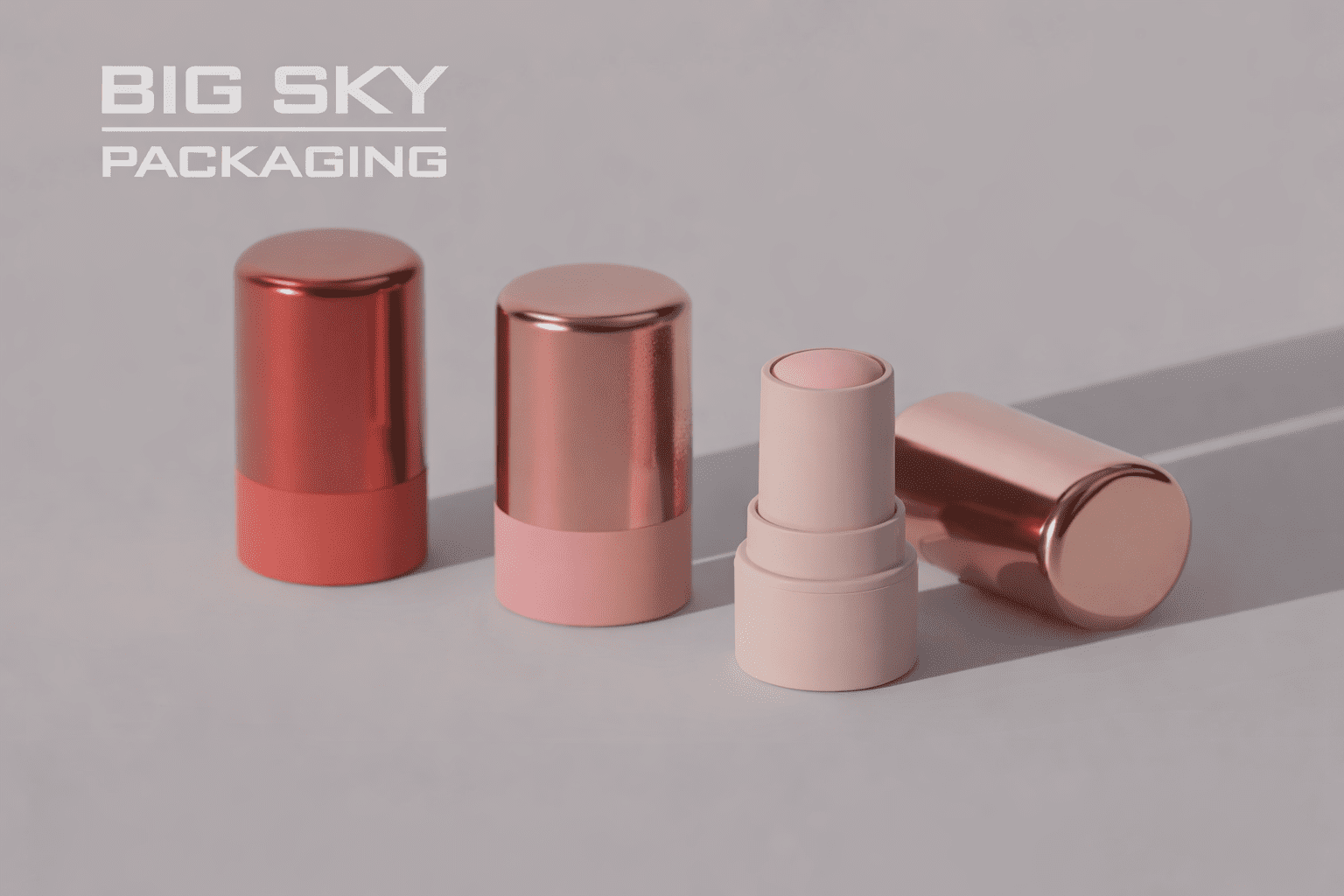
Twist-up makeup packaging—used widely for lipsticks, balms, concealers, foundations, and multi-sticks—appears deceptively simple. In reality, it is one of the most mechanically demanding components in color cosmetics. When poorly engineered, twist-up packaging can introduce hidden costs that erode margins, strain supply chains, and undermine brand credibility long after a product reaches the shelf.
At BIG SKY PACKAGING, we have seen firsthand how packaging decisions made early in development can either protect a brand’s investment—or quietly compromise it.
What Does Failed Twist-Up Packaging Cost Brands?
The most immediate cost of inadequate twist-up engineering is product failure in the hands of the consumer. Common issues include inconsistent torque, product sticking or collapsing back into the base, cracking mechanisms, and caps that loosen during transport. These failures often result in returns, negative reviews, and lost repeat purchases.
Industry data consistently shows that packaging issues are among the top drivers of cosmetic product returns. Once consumer trust is lost, especially in competitive color cosmetics categories, it is difficult and costly to regain.
How Poorly Designed Packaging Can Drive Up Manufacturing Costs
Poorly designed twist-up components frequently lead to inefficiencies during filling and assembly. Misaligned internal tolerances, weak elevator platforms, or incompatible resin selections can slow filling lines, increase reject rates, and force manual rework.
What may appear as a modest per-unit cost savings on paper often translates into higher landed costs once production inefficiencies are accounted for. Experienced brands understand that manufacturing stability—not just unit price—determines true profitability.
What Happens to Supply Chains When Packaging Fails
When twist-up packaging fails post-launch, brands are often forced into costly requalification cycles. This can involve new tooling, additional testing, artwork adjustments, and delayed production schedules. In regulated or prestige categories, requalification may also trigger additional compliance or stability testing.
These disruptions strain vendor relationships and divert internal resources away from growth initiatives—an avoidable outcome with proper upfront engineering.
How Do Packaging Mechanics Influence Consumer Perceptions of Brand Quality?
Twist-up packaging is a tactile experience. Consumers judge quality by how smoothly a product advances, how securely it closes, and how substantial it feels in hand. Lightweight or inconsistent mechanisms can make even a well-formulated product feel inferior.
Packaging has long been a silent brand ambassador. When it underperforms, it sends an unintended message about quality and attention to detail.
How BIG SKY PACKAGING Helps Brands Get It Right
At BIG SKY PACKAGING, we take a disciplined approach to twist-up makeup packaging. We work closely with trusted manufacturing partners to evaluate internal mechanics, material selection, torque performance, fill compatibility, and long-term durability—before production begins.
Our team helps brands balance aesthetics, performance, scalability, and cost with an emphasis on repeatable quality. By addressing risks early, we help prevent the downstream expenses that quietly undermine profitability.
Well-engineered twist-up packaging is not a luxury—it is a safeguard for your brand.
If you are evaluating or redesigning a twist-up makeup component, we welcome the opportunity to share our perspective and help you build packaging that performs as beautifully as it looks.
Frequently Asked Questions
Most failures stem from poor internal tolerance engineering, incompatible resin selection, and weak elevator platform design. These flaws lead to inconsistent torque, product collapse, cracking mechanisms, or caps that loosen in transit. Temperature fluctuations during shipping can further accelerate these issues when material choices weren’t made with real-world conditions in mind.
A twist-up mechanism that feels rough or inconsistent signals poor quality—even when the formulation is excellent. Packaging dissatisfaction is consistently among the top drivers of cosmetic returns and negative reviews. Once that perception forms, rebuilding consumer trust requires significant time and investment.
Misaligned tolerances slow filling lines, raise reject rates, and force costly manual rework. What looks like a lower unit cost at sourcing often becomes a higher landed cost once inefficiencies and yield losses are accounted for. True profitability depends on manufacturing stability, not just component price.
A requalification cycle is the process of re-testing and re-approving a packaging component after a post-launch failure or change. It typically involves new tooling, stability testing, artwork updates, and production rescheduling—often taking weeks or months. The process carries both direct costs and indirect losses from delayed revenue and strained vendor relationships
Key factors include torque consistency across fill weights, material compatibility with the formula, and reliable performance at production-line speed. Long-term durability under heat, pressure, and repeated use should also be assessed. Aesthetic goals must be evaluated alongside—not ahead of—mechanical performance criteria.
The most effective approach is thorough upfront engineering review during development—covering torque testing, fill compatibility, and material validation. Testing samples across multiple production runs (not just initial prototypes) helps catch consistency issues early. Stress-testing under simulated shipping and temperature conditions adds another layer of assurance before launch.