On the Sunday after Thanksgiving, November 30, 2025, TSA screened 3,133,924 people in a single day, the busiest the agency has ever recorded. Thanksgiving falls on November 26 this year, so if travelers behave the way they did last time, the same rush can be expected.
Every one of those travelers standing in line with a carry-on is working under the same rule: TSA’s 3-1-1 limit on liquids, gels, and creams. If you sell beauty products, this creates demand for travel-size beauty packaging. Shoppers who fly have a hard ceiling, and the product that meets it with a well-made mini goes in the bag instead of being left behind at home.
Why beauty brands should invest in travel-size packaging
Travel-sized products offer several advantages:
- Repeat purchases: Loyal customers get a reason to buy a second unit of something they already use.
- Easier trial: New customers can try a product without paying full price for it.
- Holiday gifting: Minis fill gift sets and stocking-stuffer displays, which peak in the same weeks people are traveling.
Choosing the right travel-size packaging
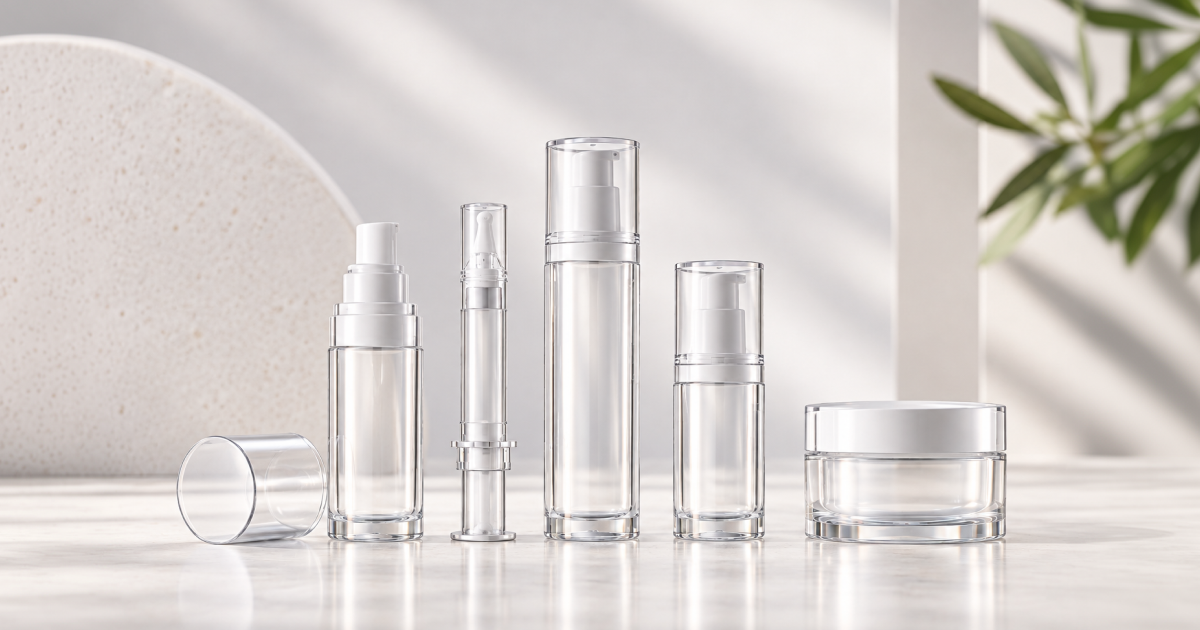
Packaging selection should begin with the product formulation. Before you pick a size, decide what kind of product it is, because the format usually settles the packaging question first and the size comes after.
| Product | Format to consider | Typical travel size |
| Cleanser, shampoo, body wash | Squeeze tube with flip-top or disc cap | 1 to 3.4 fl oz (30 to 100 mL) |
| Serum, facial oil | Dropper bottle or airless mini | 0.5 to 1 fl oz (15 to 30 mL) |
| Face cream, balm | Small jar with an inner seal | 0.5 to 1.7 oz (15 to 50 g) |
| Toner, setting spray | Mist sprayer bottle | 1 to 2 fl oz (30 to 60 mL) |
| Single-use treatment | Packette or sample sachet | Single dose |
How to prevent leaks during travel

A bottle that seals perfectly at sea level can still weep at cruising altitude, since cabins are usually pressurized to the equivalent of 6,000 to 8,000 feet. That difference in pressure pushes product out past loose threads and caps with no liner. Heat adds stress, too: a parked car in summer can climb well past 100°F.
Selecting compatible closures and conducting pressure testing can reduce the risk of leakage. Put a liner or an induction seal under the cap, add a locking actuator or an overcap to any pump or sprayer, and ask your supplier to leak the test under reduced pressure and high heat, then review the test results before you approve production.
Pre-order checklist for sample size packaging
- Every liquid SKU is 3.4 fl oz (100 mL) or under, with the volume printed clearly.
- The closures have been leak tested at reduced pressure and high heat, and you’ve seen the results.
- The mini’s decoration matches the full size, so shoppers recognize your brand at a glance.
- It fits your gift set insert as well as your e-commerce mailer, so you don’t have to create new secondary packaging.
- The label carries what FDA requires under MoCRA, including contact details for adverse event reports.
How BIG SKY PACKAGING can help
BIG SKY PACKAGING offers sample programs along with jars, closures, bottles, tubes, packettes, droppers, and airless packaging. With customized stock packaging, you can add decoration and complementary components to proven stock formats, a practical option when minis need to be ready on a short timeline.
For kits that ship directly to customers, the e-commerce solutions team can help with manufacturing, material selection, construction, and decoration to make the packaging more durable in transit. BIG SKY PACKAGING also oversees production, quality assurance, and shipment.
If you want your minis ready in time, get them on the calendar now. Call 212-620-3100 or reach the team through the Big Sky Packaging contact page to talk through sizes, closures, and realistic timing for your travel and holiday kits.