For wineries, Q3 and Q4 represent far more than peak shipping periods. They are often the most important opportunity of the year to strengthen wine club retention, increase repeat purchasing behavior, and elevate long-term customer lifetime value.
As holiday allocations, seasonal releases, and gifting programs begin moving through fulfillment pipelines, packaging becomes one of the most visible expressions of a winery’s brand. Long before a bottle is opened, the customer experience has already begun.
In direct-to-consumer wine programs, premium packaging is no longer viewed as an optional enhancement. Increasingly, it is part of the retention strategy itself.
Why the Unboxing Experience Matters More During Holiday Shipments
Holiday wine club shipments carry a different emotional expectation than standard quarterly allocations. Customers are not simply receiving wine. They are receiving a curated experience tied to celebration, entertaining, and gifting.
This shift changes how members evaluate the shipment when it arrives at their doorstep.
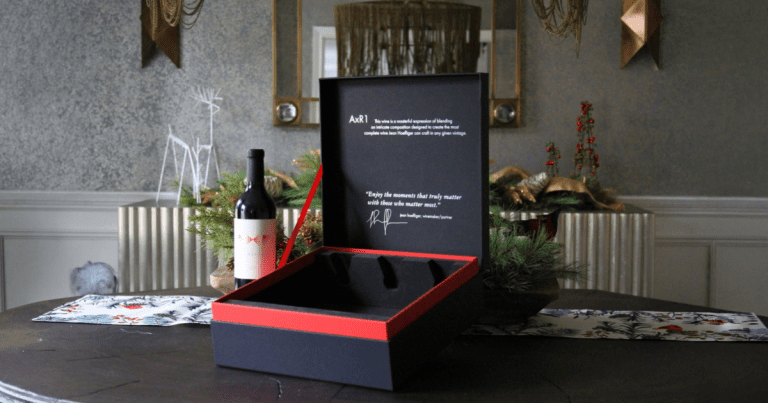
A thoughtfully designed wine box can immediately communicate quality, exclusivity, and care. Clean structural presentation, elevated materials, organized inserts, and premium finishes all contribute to a stronger emotional response during the unboxing process.
That first interaction matters.
In many cases, holiday wine club shipments are also shared with family, guests, or posted on social media platforms. Packaging that feels elevated and gift-worthy naturally increases organic visibility and brand exposure beyond the original customer.
For wineries investing heavily in customer acquisition and loyalty programs, packaging becomes part of the overall retention strategy. A premium presentation reinforces the perception that membership delivers something differentiated and worth renewing year after year.
Structural Considerations for Direct-to-Consumer Wine Club Programs
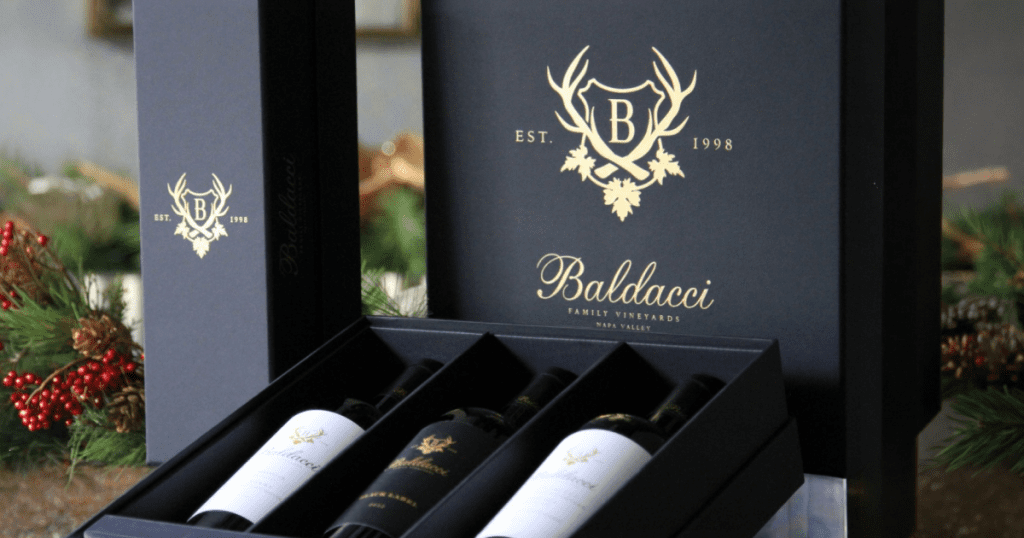
Wine club shipments face unique logistical demands compared to traditional retail packaging.
Direct-to-consumer fulfillment requires packaging systems that balance presentation with durability, operational efficiency, and shipping compliance. During colder-weather months, those demands become even more critical due to increased carrier handling, longer transit windows, and temperature-related risks.
Structural engineering should focus on several key areas:
- Bottle protection and separation
- Compression strength during stacking and transit
- Ease of pack-out within fulfillment operations
- Consistency across varying bottle sizes
- Insulation and cushioning performance
- Customer ease-of-opening experience
Many wineries are now moving beyond standard corrugated shipper formats by incorporating upgraded presentation elements directly into the structural design.
Examples include:
- Rigid wine boxes with magnetic closures
- Molded pulp bottle inserts with premium outer wraps
- Reusable wooden or paperboard gift formats
- Two-piece rigid boxes for limited-edition releases
- Book-style presentation boxes with branded interiors
- Hybrid e-commerce and retail-ready packaging systems
These formats help wineries create a more memorable customer experience without compromising shipping performance.
Sustainability vs. Luxury Presentation
Historically, luxury packaging and sustainability were often viewed as competing priorities. Today, wineries are increasingly expected to deliver both.
Consumers — particularly premium wine buyers — are paying closer attention to recyclability, reusable formats, FSC-certified paper materials, molded fiber alternatives, and overall environmental impact.
The challenge for wineries is maintaining elevated presentation while reducing excess material and unnecessary waste.
Fortunately, sustainable packaging solutions have evolved significantly in recent years.
Modern molded pulp inserts can now provide a refined appearance while offering strong bottle protection and recyclability. Textured paper wraps, soft-touch coatings, soy-based inks, and minimalist structural designs allow wineries to create premium presentation without relying heavily on plastics or foam components.
Many wineries are also adopting reusable packaging concepts that extend brand visibility beyond the initial shipment. Magnetic closure boxes, premium paperboard formats, and reusable storage boxes often remain in customers’ homes long after the wine has been consumed.
That extended visibility reinforces brand recognition and perceived value over time.
Cost-Effective Upgrades That Improve Perceived Value
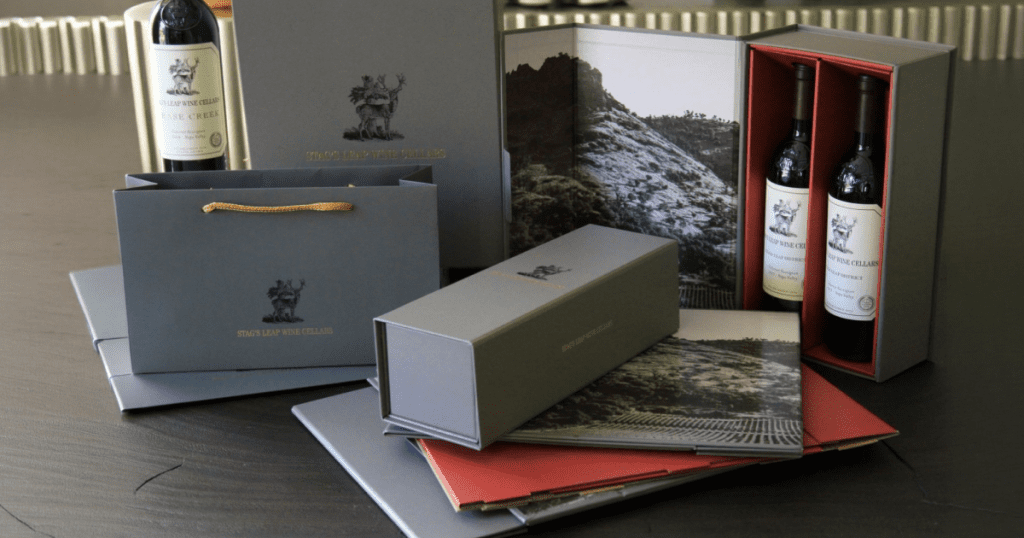
Not every winery needs to implement highly customized packaging systems to create a stronger customer experience.
In many cases, relatively modest upgrades can significantly improve perceived value without dramatically increasing packaging spend.
Some of the most effective cost-conscious enhancements include:
- Soft-touch or matte finish laminations
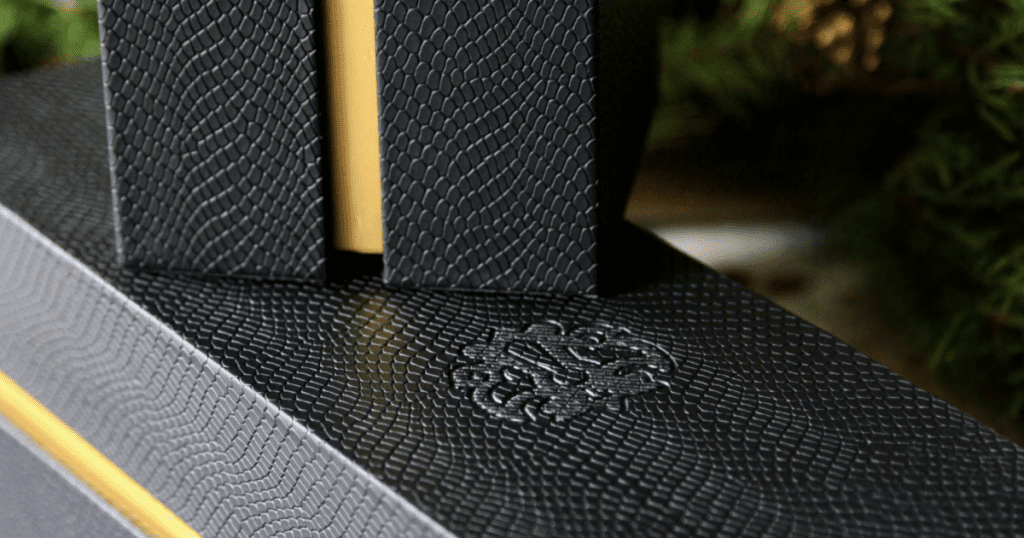
- Foil stamping or subtle embossing
- Custom tissue paper or inserts
- Branded interior messaging
- Premium closure systems
- Color-coordinated molded pulp inserts
- Improved bottle presentation orientation
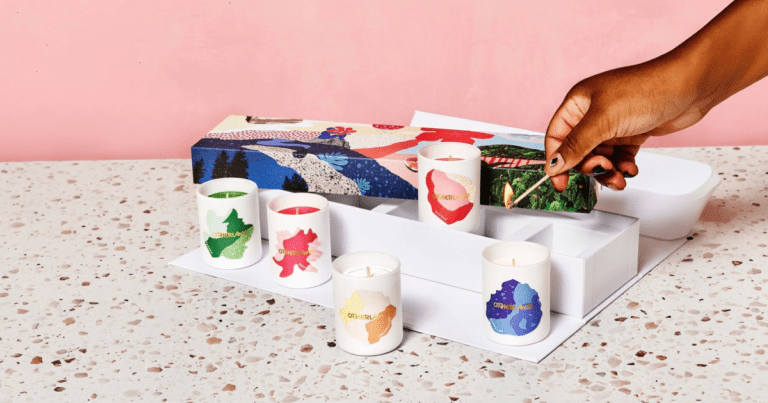
- Seasonal graphics for holiday releases
- Personalized wine club notes
These enhancements help transform a shipment from a standard delivery into a more intentional brand experience.
Importantly, perception often carries greater influence than actual packaging cost. Customers typically evaluate overall presentation holistically rather than itemizing the cost of individual packaging elements.
For wineries focused on retention and repeat purchasing behavior, that distinction matters.
Reducing Damage Claims During Colder-Weather Shipping Periods
Premium packaging also serves an operational purpose.
During late fall and winter shipping periods, wineries frequently encounter increased risks associated with carrier handling, temperature fluctuations, and longer transit times tied to holiday shipping congestion.
Packaging failures can lead to:
- Broken bottles
- Label damage
- Leakage
- Negative customer experiences
- Increased replacement costs
- Higher customer service burden
Well-engineered wine club packaging can help mitigate many of these issues.
Rigid outer structures, reinforced corrugated systems, molded pulp inserts, and secure bottle separation all contribute to better in-transit performance. In many cases, investing slightly more upfront in structural packaging reduces downstream costs tied to reshipments, claims, and customer dissatisfaction.
This becomes especially important during holiday fulfillment periods when customer expectations are elevated and replacement timing becomes more difficult.
How BIG SKY PACKAGING Helps Wineries Elevate Wine Club Programs
At BIG SKY PACKAGING, we work closely with wineries to develop packaging solutions that support both operational performance and brand positioning during critical shipping periods.
Unlike traditional packaging suppliers that focus strictly on manufacturing, BIG SKY PACKAGING acts as an extension of a winery’s packaging and operations team — helping guide projects from concept development through production, quality control, and final delivery.
Our experience across luxury packaging, direct-to-consumer fulfillment, and wine club programs allows us to help wineries navigate several common challenges:
- Balancing premium presentation with shipping durability
- Improving perceived value without overengineering cost
- Reducing freight inefficiencies and damage claims
- Coordinating complex holiday timelines and production schedules
- Identifying sustainable materials that still feel elevated
- Streamlining sourcing across multiple packaging components
Because we maintain a diversified global manufacturing network across North America, Europe, South America, and Asia, we are able to provide flexible solutions based on volume requirements, lead times, decoration complexity, and budget considerations.
This flexibility becomes especially valuable during Q3 and Q4 when wineries are balancing seasonal launches, holiday gifting programs, and increased fulfillment demand.
BIG SKY PACKAGING also helps wineries evaluate structural packaging from both a branding and logistics perspective — ensuring the packaging not only looks premium upon arrival, but performs reliably throughout the shipping process.
From magnetic closure rigid boxes and molded pulp inserts to sustainable wine club formats and reusable gifting concepts, our goal is to help wineries create packaging systems that strengthen customer experience while supporting long-term retention and customer lifetime value.
Packaging as a Retention Strategy
As wineries prepare for Q3 and Q4 wine club fulfillment, packaging should be viewed as more than a shipping necessity.
It is a direct extension of the brand experience.
The wineries that continue strengthening retention and customer lifetime value are increasingly those that understand how packaging influences perception, gifting behavior, social engagement, and overall member satisfaction.
In a highly competitive direct-to-consumer wine market, the physical experience surrounding the bottle can become just as important as the wine itself.
And during the holiday season, that experience often leaves the most lasting impression.